AI Chatbots for Healthcare and Dental Practices: Answering Appointment, Insurance, and New Patient Questions Automatically
Updated August 27, 2026 · 7 min read
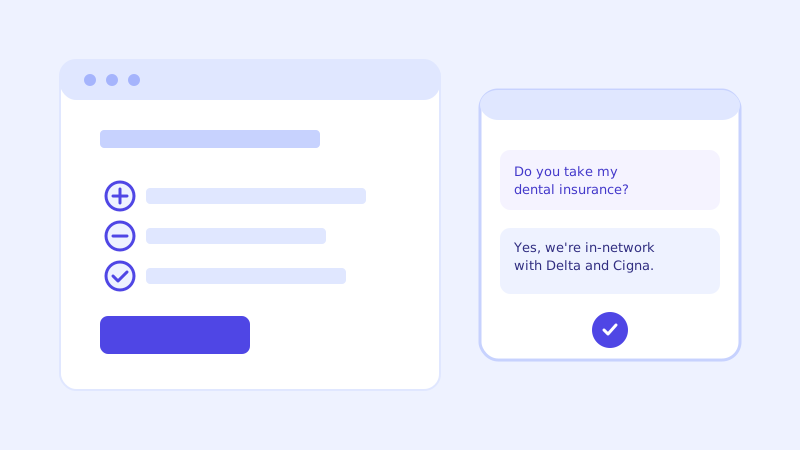
A patient calling a dental office or a clinic's front desk is usually deciding one of a few things before they'll even schedule a visit: does this practice take their insurance, are they accepting new patients right now, and what should they actually bring to a first appointment. A front desk fields the same handful of questions on repeat, often while also checking in the patient standing right in front of them, which means a caller with a simple question can wait on hold for several minutes just to hear a yes or no.
Why healthcare and dental questions cluster so tightly
Despite how different a dental practice, a primary care clinic, and a specialty office are from each other, the pre-appointment questions patients ask are strikingly narrow: do you take a specific insurance plan, are you accepting new patients, what are your hours and where are you located, what should a first-time patient bring or fill out ahead of time, and do you offer telehealth for a given kind of visit. None of these require understanding a patient's actual medical situation. They require reading the insurance page, the new patient page, and the hours page correctly, which is exactly the kind of question a chatbot built from a website crawl is suited to answer.
Where a crawl-based chatbot fits naturally
Most practice websites already have the raw material written down: a list of accepted insurance plans, a new patient page describing what to bring and what forms to fill out ahead of time, a services or specialties page, and an hours and location page. A chatbot that crawls this content directly turns it into something a patient can ask in plain language instead of scrolling a PDF insurance list on their phone while on hold. Update the accepted insurance list or add a new provider, and the next crawl picks it up, with no separate step to re-teach the bot about the change.
The part a one-time crawl gets wrong: insurance panels and open slots
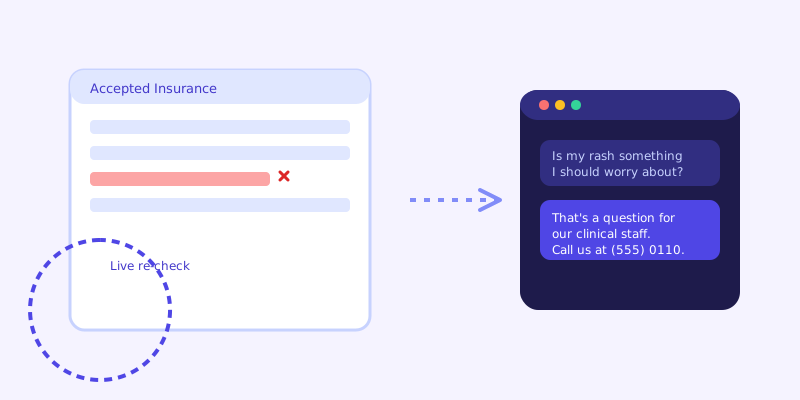
Insurance acceptance and new patient status change more than most practices update their website to reflect. A practice can close its panel to a specific insurer, a provider can stop accepting new patients while the rest of the practice keeps taking them, and a page listing accepted plans can go months without being revisited even after the actual list changed. A chatbot working from a stale snapshot will confidently tell a patient their insurance is accepted when the practice dropped that plan last quarter, which wastes the patient's time and creates a billing surprise that reflects badly on the practice, not the chatbot. This is where a live re-check matters: when a stored answer about insurance or new patient status scores low confidence, the bot re-fetching the actual page before answering catches a change the last crawl missed, and folds the fresh detail back into its knowledge base so the next patient asking the same thing gets the current answer.
Where the chatbot needs to stop and hand off
Healthcare is one of the clearest cases where a chatbot's boundaries matter as much as what it can answer. A patient describing symptoms, asking whether something warrants an urgent visit, or asking for guidance on a medication is asking a clinical question, and a well-built chatbot should decline to answer those directly and route the patient toward calling the office or, for anything urgent, seeking care immediately, rather than attempting a confident-sounding response it has no business giving. The same caution applies to what the chatbot should collect. It has no reason to ask a patient for their date of birth, a health condition, or an insurance member number in the chat itself, since none of that is needed to answer an informational question, and asking for it only creates a privacy risk with no real benefit to the patient.
What this looks like across different kinds of practices
A dental practice typically fields questions about specific procedures, whether they treat children, and payment plans for larger treatments, most of which is already covered on a services or new patient page if one exists. A primary care or family clinic gets asked heavily about insurance acceptance and whether they're taking new patients, questions that are informational but change often enough that a live re-check matters more here than for most other verticals. A specialty practice, like a dermatology or orthodontic office, tends to field more questions about whether a specific concern is even something they treat, which a clear, plainly written services page answers well without the bot needing to make any judgment call about the patient's actual condition.
Getting your site ready before you connect a chatbot
A few checks make the biggest difference before the first crawl. Keep your accepted insurance list on one current page as plain text, not a PDF, and update it the moment your billing team confirms a change. State new patient status clearly, since a page that never says whether you're accepting new patients leaves both the bot and the visitor guessing. List what a first-time patient needs to bring or fill out ahead of a visit, since this is one of the most common pre-appointment questions and one of the easiest to answer well once it's written down. And make sure your hours and location are current everywhere they're listed, since a homepage and a contact page quietly drifting apart is a gap a chatbot will surface immediately.
What to check once it's live
The unanswered-question log for a healthcare or dental practice tends to surface a specific, useful pattern: a cluster of questions about one particular insurance plan usually means that page needs an update, and a cluster of clinical-sounding questions is a signal the bot is correctly declining to answer and routing to staff, which is the right outcome rather than a gap to fix. Reviewing that log regularly helps a practice tell the difference between a content fix and a boundary the chatbot is holding exactly as it should.
The actual payoff
The value for a healthcare or dental practice isn't a chatbot that can discuss medicine. It's one that tells a prospective patient at 7pm whether their insurance is accepted and whether the practice is taking new patients, without tying up a front desk line that's also trying to check in the patient sitting in the waiting room. That's a narrow job done well, using the same insurance and new-patient information the practice already maintains for anyone reading the site directly, with a clear, honest line drawn around anything that actually requires a clinician's judgment.
Frequently asked questions
Can an AI chatbot tell patients if their insurance is accepted?
Yes, as long as the practice's accepted insurance list is written clearly on the website. A chatbot with a live re-check goes further, since if its stored knowledge about a specific plan looks stale or low-confidence, it re-fetches the actual insurance page before answering, which matters because panels change more often than most practice websites get updated.
Should a healthcare chatbot answer questions about symptoms or medical advice?
No. A well-built chatbot should decline clinical questions, like symptom checks or medication guidance, and route the patient to call the office or seek care directly, rather than attempting an answer it has no basis to give. Its job is informational questions like insurance, hours, and new patient status, not clinical judgment.
Is it safe for a chatbot to collect patient health information in the chat?
It shouldn't be asking for it in the first place. Answering insurance, hours, or new patient questions doesn't require a patient's date of birth, condition, or insurance member number, and a chatbot has no reason to request that kind of information through a chat widget when the questions it's actually built to answer don't need it.
How often does a practice's accepted insurance list actually change?
More often than most practice websites are updated to reflect. A practice can close a panel to a specific insurer or a provider can stop accepting new patients while the page listing that information goes unchanged for months. A live re-check when confidence is low catches this kind of drift between scheduled crawls.
More articles
 Guides
How to Add an AI Chatbot to Your Website Without Code (2026 Guide)
A step-by-step walkthrough for adding a real AI chatbot to your website in minutes, no flow builder and no code required, plus exact install steps for WordPress, Shopify, Wix, and Squarespace.
Read article → Product & AI
Why Your Website Chatbot Keeps Saying "I'm Not Sure" (And How to Fix It)
Most AI chatbots answer from a snapshot of your site taken whenever they were last trained. Here's why that causes constant "I'm not sure" replies, and what a chatbot that checks live instead actually looks like.
Read article →