AI Chatbots for HOAs and Community Associations: Answering Dues, Rules, and Amenity Questions Automatically
Updated November 5, 2026 · 7 min read
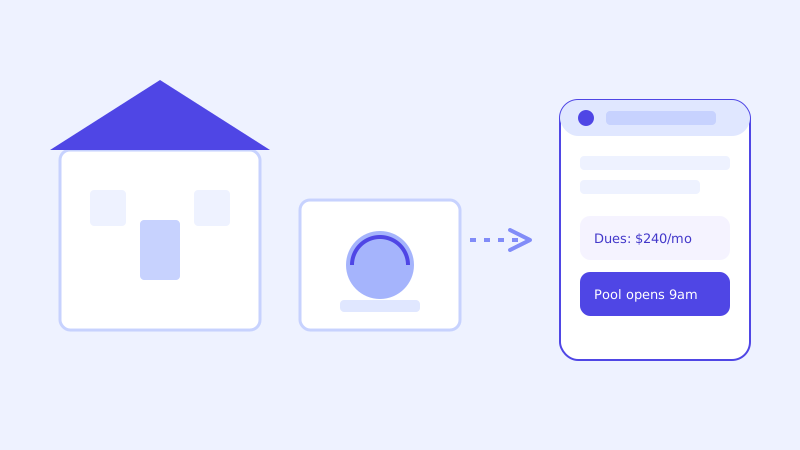
Homeowners associations and community associations run on paperwork that almost nobody reads cover to cover: CC&Rs, amenity reservation rules, architectural review guidelines, and a dues schedule that changes often enough to confuse even board members. Residents don't want to read any of it either. They want a quick answer to one specific question, usually the same handful of questions every association fields on repeat, week after week.
The questions every HOA website already gets
Across different communities, the pattern of resident questions looks remarkably similar: when are dues due and what happens if they're late, can I rent out my unit short term, do I need architectural approval to replace my fence or repaint my door, how do I reserve the clubhouse or pool, and what's the actual pet policy, since the official document and the version a neighbor mentioned at a meeting rarely match exactly. These questions repeat constantly because the answers live in dense documents residents never fully read, not because the association failed to publish the information somewhere.
Why a flow-builder chatbot struggles here
Older chatbot tools ask you to manually map every question to an answer: write an intent for dues, another for late fees, another for pet policy exceptions, and keep adding intents as residents phrase the same question a dozen different ways. For an HOA with a management company turning over staff every year or two, that manual map goes stale fast, and whoever built it originally is often long gone by the time a resident asks something the original intents never covered.
What a crawl-based chatbot does instead
A chatbot that reads your actual website, instead of a hand-built decision tree, treats your bylaws page, your amenity rules summary page, your fee schedule, and your board meeting minutes page as its source material directly. Point it at the association's website once, and it answers from whatever is actually published there, including the exact late-fee amount and the exact lead time required to book the clubhouse, without anyone retyping those numbers into a separate training tool.
Handling the documents that actually matter
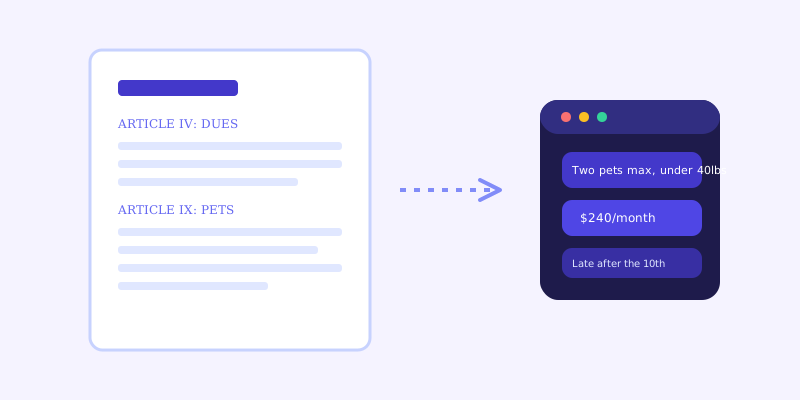
The one real catch is where the detail lives. CC&Rs and architectural guidelines are frequently stuck inside PDFs, and most chatbot crawlers read a plain webpage far more reliably than a scanned or image-heavy PDF. The fix isn't complicated: put the handful of facts residents ask about most, the dues amount, the late fee, the pet limit, the guest parking rule, directly on a plain page in text, even if the full legal document stays available as a PDF download link right next to it. The bot can then answer the common question immediately and point to the PDF for the resident who wants the full legal language.
What happens when the stored answer isn't enough
Dues increase. Boards vote in new rules. A pool schedule changes for the season. A chatbot trained once and never revisited will keep repeating last year's numbers confidently, which is worse than not answering at all, since a resident who gets a wrong late-fee amount from the official website has a legitimate complaint. The stronger setup re-crawls on a schedule so routine updates get picked up automatically, and checks the live page in real time the moment a stored answer looks uncertain, so a dues change posted yesterday doesn't take a week to reach whoever asks about it today.
Where the chatbot should step back
Not every resident question belongs to a chatbot. Disputes with a specific neighbor, fine appeals, and anything involving an individual's account balance need a person, usually the property manager or management company, not an automated answer. The chatbot's job is the repetitive, factual half of resident questions, dues amounts, booking procedures, pet limits, and parking rules, which frees up the property manager's time for the half that actually requires judgment or access to someone's account.
Getting it set up without extra work
Setting this up for an HOA website doesn't require touching the management software or exporting resident records. Point the chatbot at the public-facing association website, let it crawl the bylaws summary, fee schedule, and amenity pages, and embed the resulting widget with one script tag. Nothing about the setup touches sensitive resident data, since the bot only ever answers from what's already published publicly, the same information any homeowner could already find by reading through every linked document themselves, just considerably faster.
Frequently asked questions
Can an AI chatbot read our HOA's CC&Rs and bylaws if they're PDFs?
Not reliably on their own. Most chatbot crawlers read standard webpages far better than scanned or image-heavy PDFs, so the most useful fix is publishing the handful of facts residents ask about most, like dues amounts and pet limits, directly on a plain page in text, with the full legal PDF linked alongside it for anyone who wants the complete document.
Will the chatbot know about a dues increase or new rule the board just approved?
Only if the current numbers are published on the website and the chatbot re-crawls afterward. A chatbot that re-crawls on a schedule, and ideally checks the live page again the moment an answer looks uncertain, picks up a dues change or new rule without anyone manually retraining it.
Can the chatbot handle individual resident account questions, like a specific balance or fine?
No, and it shouldn't try to. Account-specific questions need access to resident records and usually a person's judgment, like a fine appeal. The chatbot is a good fit for the repetitive, factual questions that apply to every resident the same way, dues schedules, booking rules, and pet policies, and should hand off anything account-specific to the property manager or management company.
Does setting this up require sharing resident data with the chatbot provider?
No. The chatbot only reads whatever is already published on the association's public website, the same information any homeowner could find by reading the site themselves. Setting it up doesn't involve connecting resident records, account balances, or any system beyond the website itself.
Try it yourself
Point ChatCrawl at your HOA's website and get a trained chatbot in minutes →
Build my chatbotMore articles
 Guides
How to Add an AI Chatbot to Your Website Without Code (2026 Guide)
A step-by-step walkthrough for adding a real AI chatbot to your website in minutes, no flow builder and no code required, plus exact install steps for WordPress, Shopify, Wix, and Squarespace.
Read article → Product & AI
Why Your Website Chatbot Keeps Saying "I'm Not Sure" (And How to Fix It)
Most AI chatbots answer from a snapshot of your site taken whenever they were last trained. Here's why that causes constant "I'm not sure" replies, and what a chatbot that checks live instead actually looks like.
Read article →