AI Chatbots for Home Service Businesses: Answering Service Area, Emergency, and Estimate Questions Automatically
Updated September 17, 2026 · 7 min read
A homeowner with water spreading across the kitchen floor doesn't search calmly. They pull up their phone, search "emergency plumber near me," and land on the first few websites that answer their actual, urgent question fastest: do you cover my area, can someone come tonight, and roughly what is this going to cost. A site that makes them fill out a contact form and wait for a callback loses that job to whichever competitor's site answers in the next ten seconds instead.
Why home service inquiries can't wait for office hours
Emergencies aside, most home service search traffic already skews toward evenings and weekends, since that's when people are actually home noticing the problem. A pattern that holds across HVAC, plumbing, electrical, and general contracting: the traffic doesn't stop when the office closes, but the ability to answer a phone usually does. A chatbot that reads a company's own website content doesn't have that gap. It answers a service area question at 9pm on a Saturday exactly the way it would at 9am on a Tuesday, which matters more here than in almost any other industry, since the alternative isn't a delayed reply, it's the visitor calling the next name on the list.
What visitors actually ask before they call
The questions repeat constantly across home service sites: does this company serve my zip code or town, do they handle emergency or same-day calls, what's a rough price range for a common job like a water heater replacement or an AC repair, are they licensed and insured, and how does someone actually book a visit. None of this needs a technician's judgment to answer, it needs the company's own service area page, pricing guidance, and licensing information to be written down clearly and be findable, rather than buried in a paragraph about the company's twenty-year history.
Where a live re-check matters most for home service sites
Service areas and crew availability change more often than most home service websites get updated to reflect. A company expands into a new town, temporarily stops taking new jobs because a crew is booked solid for two weeks, or runs a seasonal promotion on a specific service that isn't permanent. A chatbot working from a stale snapshot might tell a visitor a town is covered when the company actually stopped servicing it last month, or miss a current promotion entirely. This is exactly where a live re-check matters: when a stored answer about coverage, availability, or pricing scores low confidence, the bot re-fetching the actual page before answering catches a change the last crawl missed, then folds the fresh detail back into its knowledge base so the next visitor asking the same thing gets the current answer without another live check.
What this looks like across a few trades
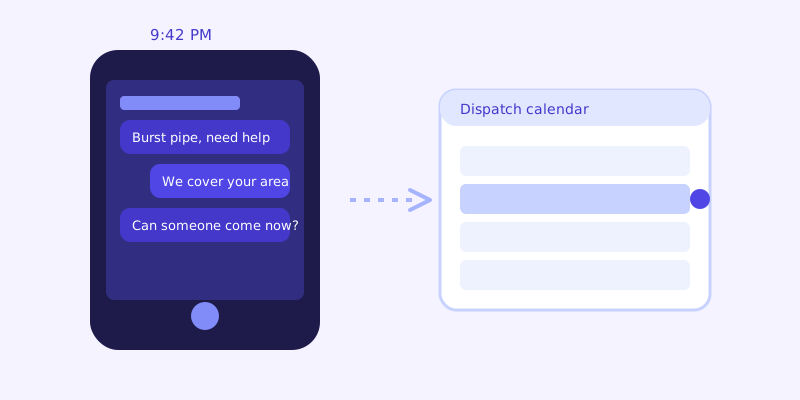
An HVAC company gets asked about service area, whether they handle a specific brand or system type, and what a maintenance plan actually includes, questions usually already sitting on a services or plans page. A plumber fields a heavy share of emergency and same-day questions specifically, along with rough pricing for common jobs like drain clearing or water heater replacement. An electrician gets asked about licensing and insurance more than most trades, along with whether they handle both residential and commercial work. A general contractor or remodeler faces a different pattern, fewer emergency questions, more about project types handled, typical timelines, and how an estimate process actually works, which a chatbot can walk a visitor through step by step instead of leaving them to guess from a portfolio page alone.
Getting your site ready before you connect a chatbot
A few fixes make the biggest difference before turning a chatbot loose on home service traffic. List every town or zip code actually served in plain text somewhere on the site, not only as a map graphic, since a chatbot can't read pins on an image. State clearly whether emergency or same-day service is offered and what that actually costs, since "call for availability" gives the bot nothing concrete to answer with. Post license and insurance information plainly if the business carries it, since it's one of the most common trust questions asked before a visitor ever requests a quote. And keep a rough price range for the handful of jobs that come up constantly, since a chatbot that can only say "contact us for a quote" on every pricing question performs barely better than no chatbot at all.
What to check once it's live
The unanswered-question log tends to surface real gaps fast for a home service site specifically: a town just outside the stated service area that the company actually does cover on request, a job type that comes up constantly but was never given its own page, or visitors asking about financing options for a large job like a full system replacement that the site never mentions. Each of those is a quick content fix, and each one closes a gap that was previously sending a visitor straight to a competitor's site instead.
The actual payoff
Home service businesses lose jobs quietly and constantly, not to bad service, but to whichever company's website answered the coverage and availability question fastest at the exact moment a homeowner was standing in a flooding kitchen or a house with no heat. A chatbot that answers those same questions instantly, at any hour, doesn't replace a dispatcher or a technician's judgment on the actual job. It makes sure the homeowner who already decided to call someone tonight calls this company instead of the next tab they had open.
Frequently asked questions
Can an AI chatbot handle emergency service requests for a home service business?
It can answer whether emergency or same-day service is offered, roughly what it costs, and how to reach the company right now, based on what the website already states. It shouldn't replace an actual dispatch process, the goal is getting the visitor a clear next step immediately rather than leaving them to guess or wait for a callback.
How does a chatbot know which towns or areas a company actually services?
A crawl-based chatbot reads whatever service area information already exists on the site. If that information only lives inside a map graphic rather than plain text, the bot can't read it, so it's worth listing served towns or zip codes as text somewhere on the site as well.
Should a home service chatbot quote prices for jobs like a water heater replacement or an AC repair?
A rough range for common, recurring job types is far more useful to a visitor than a chatbot deflecting every pricing question to "contact us for a quote," which tends to just push them to a competitor's site that gives a real number.
What happens if a company's service area or availability changes after the last crawl?
A chatbot with a live re-check catches this: when its stored answer about coverage or availability scores low confidence, it re-fetches the actual page before answering, which matters since crew availability and service areas change faster than most home service websites get manually updated.
Try it yourself
Crawl your site and start answering service calls before they're calls →
Build my chatbotMore articles
 Guides
How to Add an AI Chatbot to Your Website Without Code (2026 Guide)
A step-by-step walkthrough for adding a real AI chatbot to your website in minutes, no flow builder and no code required, plus exact install steps for WordPress, Shopify, Wix, and Squarespace.
Read article → Product & AI
Why Your Website Chatbot Keeps Saying "I'm Not Sure" (And How to Fix It)
Most AI chatbots answer from a snapshot of your site taken whenever they were last trained. Here's why that causes constant "I'm not sure" replies, and what a chatbot that checks live instead actually looks like.
Read article →