AI Chatbots for Insurance Agencies and Financial Advisors: Answering Coverage, Quote, and Compliance Questions Automatically
Updated September 3, 2026 · 7 min read
An independent insurance agency and a financial advisory firm sell very different things, but the questions that land in their inbox before a first call are nearly identical: do you cover this, what does a policy like mine typically cost, do you work with people in my situation, and how do I actually get started. None of these require a license to answer in general terms. They're the informational layer that sits in front of the licensed conversation, and right now most firms make a prospect wait for office hours to get even that far.
Why this industry needs a narrower, more careful chatbot
Insurance and financial services carry a real constraint most other industries don't: a chatbot that states something as advice, a quote, or a guarantee can create a compliance problem, not just a wrong answer. That doesn't mean a chatbot has no role here. It means the role is narrower and needs to be drawn on purpose. A chatbot built from an agency's own website can confidently explain what types of coverage or services the firm offers, what general factors affect pricing, who the firm typically works with, and how to book a consultation or request a quote. It should not attempt to quote an actual premium, recommend a specific policy or investment product, or answer anything that depends on a person's individual financial or medical details.
Where a crawl-based chatbot fits naturally
Most agencies and advisory firms already publish the raw material a chatbot needs: a services or coverage page listing what's offered, an about or team page describing who the firm works with, a general FAQ covering common process questions, and a contact or scheduling page. A chatbot that crawls this content directly turns it into instant, consistent answers instead of a prospect reading through several pages, or worse, giving up and calling a competitor who happened to pick up the phone first. Update a coverage offering or add a new service line, and the next crawl reflects it, with no separate script to rewrite.
The part a one-time crawl gets wrong: rates, terms, and disclosures
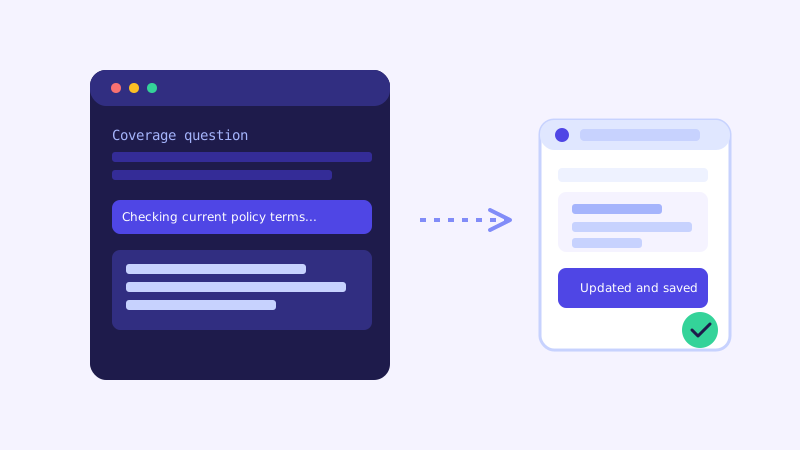
Insurance rates, plan availability, and regulatory disclosures change more often than most firms update their marketing pages, and a chatbot working from a stale snapshot can confidently repeat a rate range or a carrier partnership that's no longer current. This is exactly the situation a live re-check is built for: when a stored answer about pricing ranges or available carriers scores low confidence, the bot re-fetches the actual page before answering rather than repeating whatever it last learned, and folds the fresh content back into its knowledge base so the next visitor gets the current answer without another live check. It's a smaller safety net than compliance review, but it closes the gap between what the site says today and what the bot last read.
What this looks like for insurance versus financial advisory
An insurance agency typically fields questions about which types of coverage it sells, whether it works with a specific carrier, and what general factors (age, location, coverage amount) move a premium up or down, all of which can be answered in general terms from an existing site without ever generating an actual quote. A financial advisory firm more often gets asked about the kinds of clients it typically serves, whether it works with a certain account size or life stage, and what a first consultation involves, questions that are almost entirely about fit and process rather than specific investment advice, making them a strong match for a chatbot with no compliance risk once it's kept away from anything resembling a recommendation.
Setting the guardrail explicitly, not by accident
The safest version of this isn't a chatbot that happens to avoid advice because nobody asked it anything risky yet. It's one instructed clearly, and tested deliberately, to decline any question asking for a specific quote, a personal recommendation, or anything that depends on a visitor's individual financial or medical situation, routing that instead to a licensed team member or a quote-request form. Testing this before launch matters more here than in almost any other industry: ask the bot for a specific premium, a specific investment recommendation, or an answer that depends on a made-up personal detail, and confirm it declines cleanly every time rather than attempting to be helpful in a way that creates liability.
Getting your site ready before you connect a chatbot
A few checks make the difference before the first crawl: state coverage types and service lines in plain text rather than only behind a request-a-quote form, describe the kinds of clients or situations the firm typically works with so the bot can answer fit questions honestly, keep any required disclosures or licensing information current and visible rather than buried in a footer PDF, and make sure the actual path to a licensed conversation, a scheduling link or a call request, is easy for the bot to point to as the next step.
What to check once it's live
The unanswered-question log tends to surface the exact boundary questions worth reviewing with compliance: a prospect asking for a specific premium estimate, a client asking whether a particular investment fits their portfolio, or someone asking about a state or coverage type the firm doesn't actually serve. Each of those is either a content gap worth fixing on the site, or confirmation the bot correctly declined and handed off, which is itself useful information about where the line is actually being tested by real visitors.
The actual payoff
The value here isn't a chatbot that sounds like a licensed advisor. It's one that answers the fit and process questions honestly at any hour, so a prospect who's ready to talk to a real person can get there faster instead of abandoning a contact form because nobody answered before the next business day. For firms where every qualified lead matters and every unqualified answer carries real risk, drawing that line clearly on purpose is the whole design problem, and it's a solvable one with the right guardrails in place from day one.
Frequently asked questions
Can an AI chatbot give someone an actual insurance quote or investment advice?
It shouldn't, and a well-built one won't. A chatbot built from an agency's or advisor's own website can explain coverage types, general pricing factors, and who the firm typically works with, but it should decline anything that amounts to a specific quote, a personal recommendation, or advice depending on someone's individual situation, routing that instead to a licensed team member.
Is it risky from a compliance standpoint to put a chatbot on an insurance or financial advisory website?
The risk comes from what the bot is allowed to say, not from having a chatbot at all. A chatbot restricted to general, already-published information about services, coverage types, and process, with a clear instruction to decline anything resembling advice or a quote, keeps the same boundary a firm's own website copy already respects.
How does a chatbot handle rates or coverage options that change often?
A chatbot with a live re-check helps here: when its stored knowledge about pricing ranges or carrier availability scores low confidence, it re-fetches the actual page before answering instead of repeating outdated information, then saves the fresh content back into its knowledge base for future visitors.
Should an insurance or financial services chatbot be tested differently before launch?
Yes. Beyond the usual accuracy checks, it's worth deliberately asking the bot for a specific quote, a personal recommendation, or an answer depending on a made-up personal detail, and confirming it declines cleanly every time. That test matters more in this industry than in most others, since an overly helpful answer can create real liability.
More articles
 Guides
How to Add an AI Chatbot to Your Website Without Code (2026 Guide)
A step-by-step walkthrough for adding a real AI chatbot to your website in minutes, no flow builder and no code required, plus exact install steps for WordPress, Shopify, Wix, and Squarespace.
Read article → Product & AI
Why Your Website Chatbot Keeps Saying "I'm Not Sure" (And How to Fix It)
Most AI chatbots answer from a snapshot of your site taken whenever they were last trained. Here's why that causes constant "I'm not sure" replies, and what a chatbot that checks live instead actually looks like.
Read article →