AI Chatbots for Vacation Rentals and Short-Term Rentals: Answering Check-In, House Rules, and Booking Questions Automatically
Updated October 26, 2026 · 7 min read
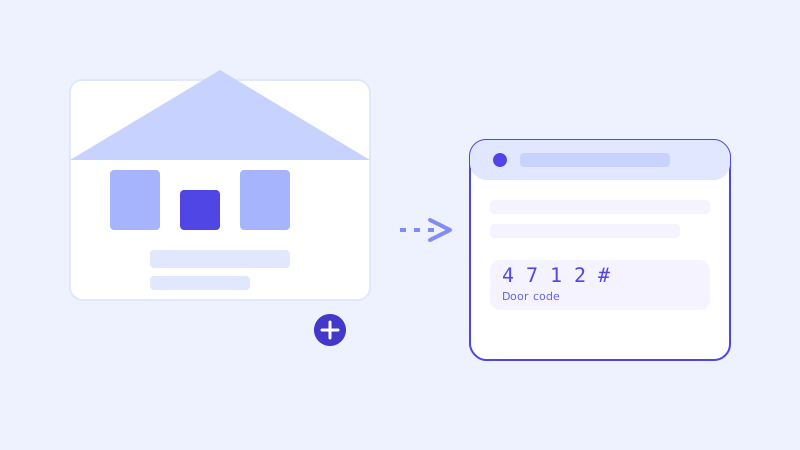
A guest scrolling a vacation rental listing at 11pm the night before their trip wants three things fast: what time can they actually get in, what's the door code or key situation, and is there anything about the house they need to know before they show up. None of this is complicated information. It's also exactly the kind of question that arrives outside business hours, from a phone, from someone who has already booked and just wants a straight answer before they start driving.
The questions that repeat on every listing
Across hosts and property types, the same handful of questions show up over and over: what time is check-in and check-out, how do guests actually get into the property, what's the wifi password, is there parking, are pets allowed, what's the cancellation policy, and is early check-in or late checkout possible. A listing page, a welcome guide, and a house rules section usually already answer most of these in writing. The problem isn't that the information doesn't exist, it's that a guest messaging at an odd hour has no easy way to search through a PDF welcome book to find it.
Why a crawl-based chatbot fits a rental site well
A chatbot that reads a rental's website directly, rather than requiring a host to copy every detail into a separate training tool, fits this pattern closely because the content is usually already written for a guest to read. Point the crawler at the listing page, the house rules, and any guest FAQ section, and the bot answers from the same text a guest would otherwise have to find and read themselves, just faster and at any hour. Update the house rules or swap the wifi password, and the next crawl picks up the change without a separate step to keep two copies in sync.
The one thing worth a live check: check-in readiness
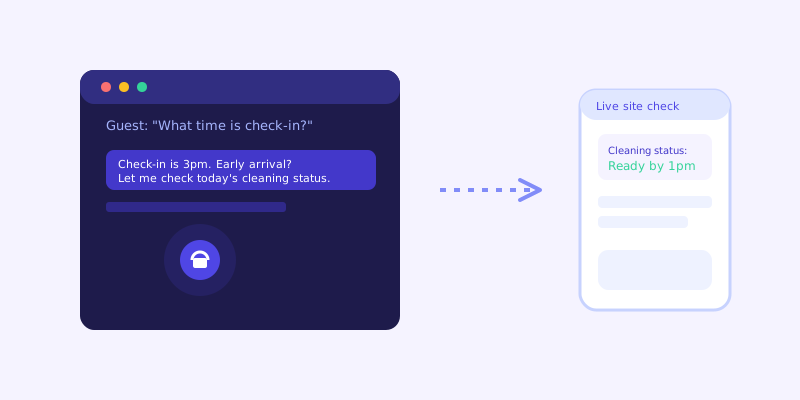
Checkout and cleaning times barely move from booking to booking. Whether a specific unit is actually ready for an early check-in request on a given day changes constantly, and a chatbot repeating a generic policy line misses the one detail the guest actually wants to know. This is where a live recheck earns its place: when a guest asks something time-sensitive, like whether a unit is cleaned and ready ahead of the standard time, a stored answer that scores low confidence triggers a fresh look at the current page or calendar rather than a canned response. The fresh answer then gets folded back into what the bot already knows, so the next guest asking about that same unit gets a current answer without triggering another live check.
What this looks like for a single host vs a management company
A single host managing one or two properties tends to get highly specific questions, exactly where the extra key is hidden, which neighbor's fence the dog shouldn't bark at, so the welcome guide needs to spell those details out rather than relying on general house-rule language. A short-term rental management company running dozens of units across different buildings benefits more from consistency, since the same handful of booking and cancellation questions repeat at volume across every property, and a chatbot answering them the same correct way every time removes a meaningful share of the back-and-forth a small guest-services team would otherwise handle by hand.
Getting your listing site ready before you connect a chatbot
A few checks before connecting a chatbot save most of the cleanup later. Put check-in and check-out times in plain text on the listing itself, not only inside a PDF guests only open after booking. State the cancellation policy in full rather than linking to a generic platform policy that may not match what's actually offered. List pet, parking, and smoking rules explicitly instead of assuming a guest will infer them from photos. And keep a guest FAQ or house rules page current, since a chatbot can only repeat what's actually written down, not what a host meant to update after the last stay.
What to check once it's live
The unanswered-question log tends to surface the same kinds of gaps for rental sites: a nearby restaurant or grocery store guests ask about that was never mentioned anywhere, a specific appliance quirk, like how a particular shower or thermostat works, that never made it into the welcome guide, or a question about an amenity, a pool, a hot tub, a fire pit, that the listing shows in photos but never actually describes in text. Each of those is a short addition to a page, not a chatbot problem, and each one is a question a host would otherwise have answered by text message during their own time off.
The actual payoff
The value isn't in handling an unusual guest request well. It's in handling the same handful of ordinary questions correctly, at whatever hour a guest happens to be packing or already on the road, without a host checking their phone during dinner or a management company's guest-services line going to voicemail. A guest who gets a clear answer about check-in or parking before they arrive starts the stay with one less thing to worry about, and that's a better first impression than any amenity listed on the page.
Frequently asked questions
Can an AI chatbot give guests the actual door code or key information?
Yes, if that information is written somewhere the chatbot can read, such as a guest portal page or a booking confirmation page. For security-sensitive details many hosts prefer the chatbot point guests to where they'll receive that information closer to arrival rather than storing it in the general knowledge base.
What's the one thing that should trigger a live check instead of a stored answer?
Anything tied to same-day status, most commonly whether a unit is cleaned and ready for an early check-in request. Cancellation policy and standard check-in times rarely change and answer well from a stored crawl, but readiness on a specific day is worth a fresh look rather than a generic policy line.
Do I need a separate welcome guide if I set up a chatbot?
It helps to keep one, but it should live as a readable page the crawler can access rather than only a PDF guests receive after booking. A chatbot can only answer from text it can actually read, so house rules and guest FAQs belong on the site itself, not buried in an attachment.
How is this different from a chatbot built for long-term property management?
The underlying setup is similar, but the questions skew toward same-stay logistics, check-in, house rules, local recommendations, rather than leasing questions like unit availability or application steps. A short-term rental chatbot also deals with a much shorter, more urgent question window, since guests typically ask right before or during their stay rather than weeks in advance.
More articles
 Guides
How to Add an AI Chatbot to Your Website Without Code (2026 Guide)
A step-by-step walkthrough for adding a real AI chatbot to your website in minutes, no flow builder and no code required, plus exact install steps for WordPress, Shopify, Wix, and Squarespace.
Read article → Product & AI
Why Your Website Chatbot Keeps Saying "I'm Not Sure" (And How to Fix It)
Most AI chatbots answer from a snapshot of your site taken whenever they were last trained. Here's why that causes constant "I'm not sure" replies, and what a chatbot that checks live instead actually looks like.
Read article →