AI Chatbots for Veterinary Clinics: Answering Appointment, Vaccination, and Emergency Questions Automatically
Updated September 21, 2026 · 7 min read
A pet owner searching a veterinary clinic's website at 9pm on a Sunday is usually worried about one of two things: whether tomorrow's the soonest they can get seen, or whether tonight is actually an emergency. Neither question waits well for a callback the next morning. A chatbot built from the clinic's own service, pricing, and hours pages can answer both immediately, at the exact moment an anxious pet owner is deciding whether to wait it out or head for the emergency clinic across town.
Why veterinary questions cluster the same way
Across a general practice, an exotic-animal specialist, or a multi-doctor animal hospital, the questions pet owners ask are remarkably repetitive: are you accepting new patients, do you see cats as well as dogs, what does a first visit or a vaccine bundle cost, do you offer boarding or grooming alongside medical care, and is tonight's symptom something that needs an emergency vet or can it wait until the morning. None of these require knowing a specific animal's chart. They require reading the services page, the new-patient page, and the hours page correctly, which is exactly what a crawl-based chatbot is built to do.
Where a crawl-based chatbot fits naturally
Most veterinary websites already have this written down somewhere: a services page listing wellness exams, vaccinations, dental care, and surgery, a new-patient or appointment page explaining how to get on the schedule, and an emergency or after-hours page pointing to either an on-call vet or a nearby specialty hospital. A chatbot that crawls this content directly turns it into something a worried pet owner can ask in plain language instead of digging through a homepage menu at midnight. Add a new service or update a vaccine price, and the next crawl picks it up, with no separate step to re-teach the bot.
The part a one-time crawl gets wrong: same-day slots and after-hours triage
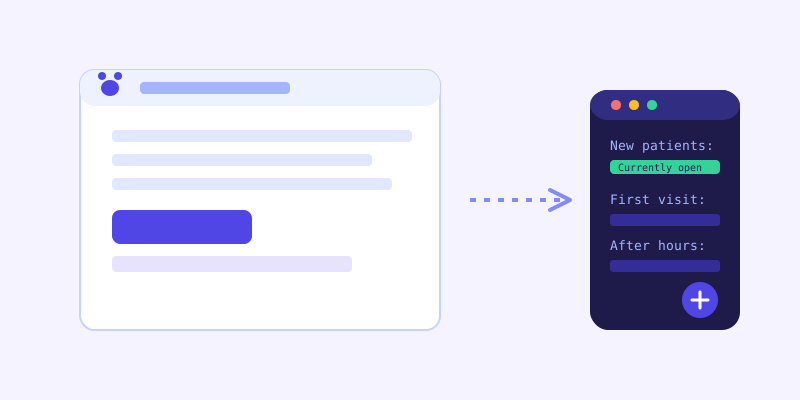
Clinic schedules and staffing change faster than most veterinary websites get updated to reflect. A practice can close its books to new patients for a few weeks while a doctor is out, a same-day sick-visit slot can fill by mid-morning, and an on-call emergency arrangement can shift between two partner hospitals depending on the night. A chatbot working from a stale snapshot might tell an owner the clinic is taking new patients when it stopped last month, or point them to the wrong after-hours number. This is exactly where a live re-check matters: when a stored answer about new-patient status or emergency coverage scores low confidence, the bot re-fetching the actual page before answering catches a change the last crawl missed, then folds the fresh detail back into its knowledge base so the next owner asking the same thing gets the current answer without another live check.
What this looks like across different kinds of practices
A general small-animal practice mostly fields wellness, vaccine, and new-patient questions, almost always answerable from a well-built services page. A specialty or emergency hospital deals with a narrower but higher-stakes set: whether a specific condition is something they treat, what a walk-in emergency visit costs upfront, and how triage works, information that needs to live in plain text since a panicked owner won't scroll far to find it. A mixed or exotic-animal practice, one that also sees birds, reptiles, or farm animals, needs its species list stated clearly and early, since an owner with an unusual pet is often deciding whether to even call based on what the site says it treats.
Getting your site ready before you connect a chatbot
A few checks make the biggest difference before the first crawl. Confirm whether the clinic is currently accepting new patients, and keep that status current on whichever page states it, since this is one of the first things a chatbot gets asked. List which species the practice actually sees, not just "we love all pets," so the bot can answer a specific exotic-pet question accurately instead of guessing. Write out emergency and after-hours guidance in plain text, including whether calls route to an on-call vet or a separate emergency hospital, since this is the one answer that genuinely can't afford to be vague. And make sure vaccine and wellness pricing, even as a range, is written somewhere the crawler can reach, rather than left to be quoted only over the phone.
What to check once it's live
The unanswered-question log tends to surface real gaps fast for a veterinary site: a boarding question the site never actually addresses, an exotic-pet question the practice does handle but never listed, or an owner asking about a specific breed's needs by a term the site doesn't use. Each of those is a small content fix, not a chatbot limitation, and each one closes a gap that was previously either a missed appointment or an owner who called somewhere else instead of waiting for a callback.
The actual payoff
The value for a veterinary clinic isn't a chatbot that can discuss animal medicine in depth. It's one that tells a worried pet owner at 9pm on a Sunday whether the clinic can see them tomorrow, what a first visit runs, and whether tonight's symptom needs an actual emergency trip, without anyone picking up a phone after hours to answer it. For a practice where a missed question can mean a genuinely sick animal goes to the wrong place, or a healthy one waits unnecessarily, that's a meaningful edge, and it comes from the same service and hours content the clinic already maintains for pet owners reading the site directly.
Frequently asked questions
Can an AI chatbot tell pet owners if same-day appointments are available?
Only if the site or a connected booking system reflects same-day slots as text, since scheduling changes by the hour and isn't something a website crawl captures on its own. A well-built chatbot should be upfront about that distinction, answering informational questions like hours and services confidently, while pointing time-sensitive scheduling questions to an actual booking link rather than guessing.
Should a chatbot handle emergency and after-hours questions?
It can answer from whatever emergency guidance is written on the site, on-call arrangements, partner emergency hospitals, or after-hours numbers, but it should never try to assess symptom severity itself. The safest setup has the bot repeat the clinic's stated emergency guidance clearly and point to the actual emergency line, rather than attempting to judge how serious a pet's symptom is.
Does a chatbot need to be trained separately for every service the clinic offers?
No, not with a crawl-based chatbot. It reads the services page directly, the same way it reads any other page, so a clinic offering everything from wellness exams to dental surgery doesn't require a manual training entry for each one. Updating the services page and letting the next crawl run is enough for the bot to pick up the change.
What should a veterinary clinic check before turning on a chatbot?
Prioritize a current new-patient status, a clear list of species actually seen, plainly written emergency and after-hours guidance, and vaccine or wellness pricing stated somewhere the crawler can reach, even as a range, rather than left to be quoted only over the phone.
Try it yourself
Crawl your clinic's pages, get a chatbot that answers pet owners instantly →
Build my chatbotMore articles
 Guides
How to Add an AI Chatbot to Your Website Without Code (2026 Guide)
A step-by-step walkthrough for adding a real AI chatbot to your website in minutes, no flow builder and no code required, plus exact install steps for WordPress, Shopify, Wix, and Squarespace.
Read article → Product & AI
Why Your Website Chatbot Keeps Saying "I'm Not Sure" (And How to Fix It)
Most AI chatbots answer from a snapshot of your site taken whenever they were last trained. Here's why that causes constant "I'm not sure" replies, and what a chatbot that checks live instead actually looks like.
Read article →