AI Chatbot vs Virtual Receptionist: What's Actually Different
Updated September 24, 2026 · 6 min read
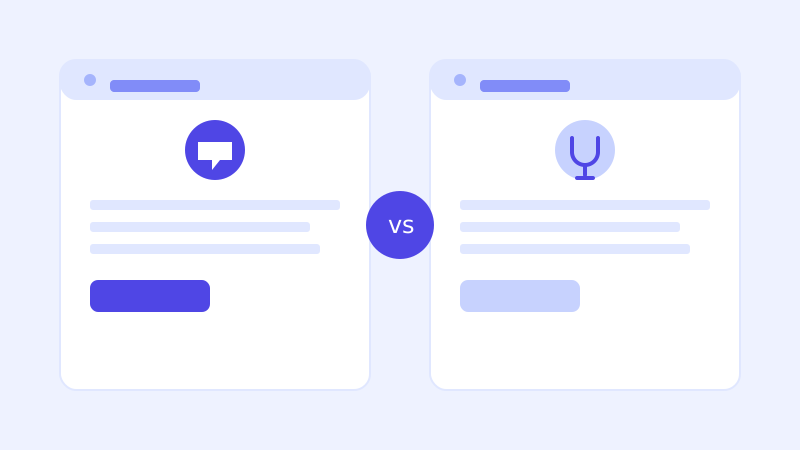
A virtual receptionist service and an AI chatbot get pitched for the same underlying problem: someone is trying to reach a business and nobody's available to answer. Beyond that, they work almost nothing alike, cost differently, and catch different moments. Understanding where each one actually helps saves you from paying for coverage you didn't need, or worse, leaving a gap neither one was built to close.
What a virtual receptionist actually is
A virtual receptionist is a phone-answering service, either a live human working from a script or an automated phone tree, that picks up calls a business can't answer itself. It's built for the phone channel specifically: taking a message, screening a caller, sometimes booking an appointment into a connected calendar, then routing the important calls through. It works during whatever hours the service covers, and it costs on an ongoing basis, usually a monthly fee tied to call volume.
What an AI website chatbot actually is
A website chatbot works on the browser channel instead of the phone. Built from a business's own website content, a crawl-based chatbot reads the pages that already exist, pricing, hours, services, policies, and answers a visitor's question directly on the site, in the moment they're already reading it. It doesn't route anyone anywhere. It answers on the spot, for free to the visitor, at any hour, without a call ever being placed.
Where the two actually differ
The biggest difference is the channel itself. A visitor reading a website at 11pm, deciding whether a business does what they need, generally won't pick up the phone to find out, they'll either find the answer on the page or leave the tab. A chatbot meets that visitor exactly where they already are. A virtual receptionist meets a different kind of visitor entirely: someone who has already decided to call, usually because the question is more specific or more urgent than a general page can answer. Neither replaces the other so much as covers a different moment in the same visitor's decision.
Cost also works differently between the two
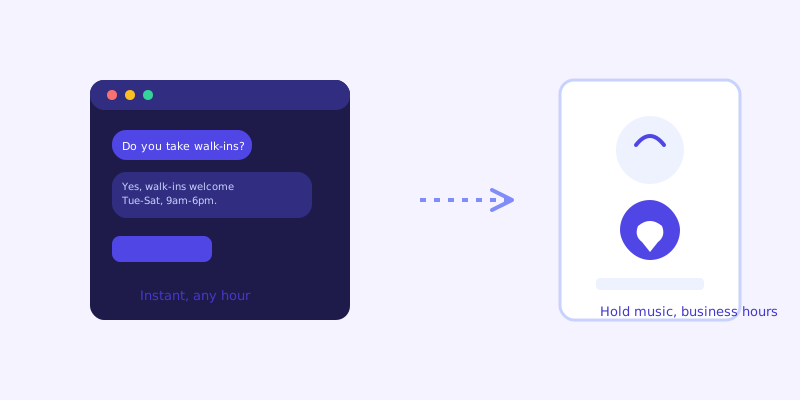
A virtual receptionist typically charges per minute or per call handled, meaning the bill scales with how busy the business actually is, which can turn into a real cost during a high-volume month. A flat-rate chatbot instead charges a fixed monthly price regardless of how many visitors ask it a question, so a slow month costs the same as a busy one, and a viral traffic spike doesn't turn into a surprise invoice the way a per-call phone service can.
Where a chatbot alone falls short
A chatbot can't take a phone call, and it can't handle a conversation that genuinely needs a human's judgment, an unusual request, a complaint, a sensitive medical or legal question. It also can't do anything the website itself doesn't cover; if pricing or policies live only in someone's head and never made it onto a page, the chatbot has nothing to answer from. A well-built one should recognize its own limits and hand off to a contact form, phone number, or live agent rather than guessing at something outside its knowledge base.
Where a virtual receptionist alone falls short
A phone service only helps the fraction of visitors willing to make a call in the first place, and on a website, that's a small share of total traffic; most visitors who don't find their answer simply leave rather than dial a number. It also does nothing for the browsing moment itself, someone deciding whether to even bother calling based on what the site tells them. A visitor who can't confirm basic pricing or hours from the page may never place the call the receptionist was waiting to answer.
Using both together
The two aren't competing for the same job, so many businesses end up running both: a chatbot answering the bulk of routine questions directly on the site, in text, at any hour, for free, and a virtual receptionist catching the calls that come in anyway, the ones specific or urgent enough that a visitor picked up the phone instead of reading further. The chatbot reduces how many of those calls happen in the first place, since fewer visitors need to call just to ask something the site can now answer itself, which often makes the receptionist service more affordable too, since it's fielding fewer routine calls.
Frequently asked questions
Is an AI chatbot cheaper than a virtual receptionist?
Usually, because a flat-rate chatbot charges a fixed monthly price regardless of volume, while most virtual receptionist services bill per minute or per call, so the cost rises with how busy the business gets. The two aren't a direct swap though, since they cover different channels, website visitors versus phone callers.
Can a chatbot replace a virtual receptionist entirely?
Only for the questions a website already answers in text. A chatbot can't take an actual phone call or handle a conversation that needs real judgment, so most businesses that get meaningful call volume still keep some form of phone coverage, with the chatbot reducing how many of those calls are routine ones in the first place.
Does a chatbot work outside business hours the way a virtual receptionist does?
Yes, a website chatbot answers at any hour since it isn't tied to staffing or a service's covered hours, it simply reads from the site's content whenever a visitor asks. A virtual receptionist's after-hours coverage depends entirely on what hours that specific service contract includes.
Which one should a small business set up first?
A chatbot is usually the faster and cheaper starting point, since it's built from content the website already has and costs a flat rate regardless of traffic. A virtual receptionist becomes worth adding once phone call volume itself is high enough that missed calls are a real cost on their own, separate from missed website visitors.
Try it yourself
See what a website-trained chatbot can answer before you pay for a call →
Build my chatbotMore articles
 Guides
How to Add an AI Chatbot to Your Website Without Code (2026 Guide)
A step-by-step walkthrough for adding a real AI chatbot to your website in minutes, no flow builder and no code required, plus exact install steps for WordPress, Shopify, Wix, and Squarespace.
Read article → Product & AI
Why Your Website Chatbot Keeps Saying "I'm Not Sure" (And How to Fix It)
Most AI chatbots answer from a snapshot of your site taken whenever they were last trained. Here's why that causes constant "I'm not sure" replies, and what a chatbot that checks live instead actually looks like.
Read article →