How to Calculate Whether Your AI Chatbot Is Actually Saving You Money
Updated August 24, 2026 · 6 min read
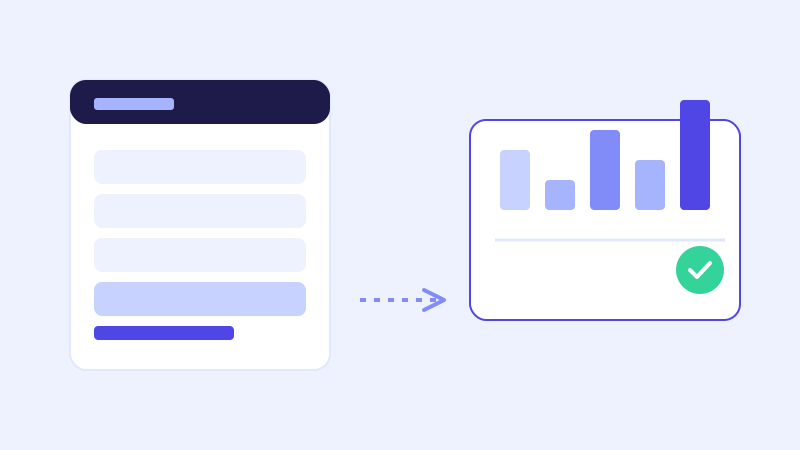
Most teams decide a chatbot is worth keeping based on a feeling: support volume seems lower, the team seems less swamped, customers don't seem to be complaining about it. That's a reasonable starting signal, but it isn't a number, and a subscription renewal decision deserves an actual one. The good news is the calculation isn't complicated. It just requires being honest about a few inputs most teams never bother to write down.
Why "it feels helpful" isn't the same as "it's worth the cost"
A chatbot can be genuinely useful and still not be worth what you're paying for it, and it can also be quietly saving you real money while nobody notices, because the savings show up as fewer emails that never got sent rather than as a line item anyone tracks. The only way to tell the difference is to compare what the chatbot costs against what it's actually replacing, in the same units, rather than trusting a general impression either way.
Start with what a support ticket actually costs you
Before you can measure savings, you need a baseline: roughly what does one human-handled support conversation cost your business. A rough version of this is easy to build. Take a support team member's fully loaded hourly cost, salary plus benefits divided by working hours, and divide it by roughly how many tickets they resolve in an hour. A team resolving 8 tickets an hour on a role that costs 40 dollars an hour loaded works out to around 5 dollars per ticket. That number will vary a lot by business and ticket complexity, but even a rough version is more useful than no number at all, and it's the figure everything else gets compared against.
Estimate how many of those tickets the chatbot is actually deflecting
This is the number teams most often skip, and it's the one that matters most. A chatbot's own conversation count isn't the same as tickets deflected, since plenty of chatbot conversations are questions that would never have become a support ticket anyway, like someone asking about pricing before they've even signed up. The more useful number is how many conversations the bot fully resolved without a human follow-up, versus how many escalated or ended with the visitor still needing to reach out. Most chatbot dashboards, including the unanswered-question log most tools provide, make this reasonably easy to estimate even without perfect tracking: a low escalation rate on a given topic is a strong proxy for real deflection.
Do the actual math: a simple formula
Multiply your estimated monthly deflected conversations by your per-ticket cost, then subtract what you're paying for the chatbot that month. Deflected conversations times cost per ticket, minus the chatbot's monthly cost, equals your monthly savings. A business deflecting 400 conversations a month at 5 dollars each is offsetting 2,000 dollars a month in support cost. Against a flat 150 dollar monthly plan, that's a clear, defensible return, not a guess.
Why pricing model changes this calculation
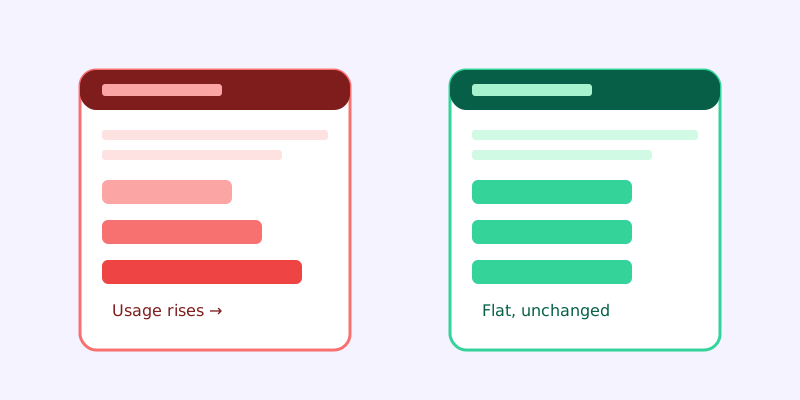
This is where the chatbot's own pricing model starts to matter for reasons that go beyond the sticker price. Under a flat monthly plan, the cost side of this equation is fixed, so every additional deflected conversation is pure upside, and the math gets more favorable the more the bot is used. Under a per-message or per-conversation pricing model, the cost side moves with the same number you're using to calculate savings, since more conversations means more billable usage. That doesn't make usage-based pricing worthless, but it means the same success, more deflected tickets, shows up as both more savings and a bigger bill, and the real ROI is the gap between those two lines rather than either one alone. Running this calculation once under each model, using your own realistic ticket volume, is the fastest way to see which one actually nets out better for your specific traffic rather than trusting whichever number was advertised.
What to watch for that ROI math misses
Raw deflection savings understate part of the picture and overstate another part, and it's worth adjusting for both. On the upside that's easy to miss: a chatbot answering instantly at 2am is preventing a slower or lower quality outcome, a delayed email reply the next business day, or a visitor who leaves without asking at all, neither of which shows up cleanly in a ticket-cost comparison but both represent real value. On the downside worth watching honestly: a chatbot that hedges constantly or gives a wrong answer doesn't just fail to deflect that conversation, it can create a second, more frustrated conversation once a human gets involved to fix the confusion, which is a real cost the raw deflection number won't capture on its own.
The check-in worth doing every quarter
ROI on a chatbot isn't a number you calculate once and file away. Ticket volume changes as a business grows, deflection rates shift as your site's content improves or goes stale, and a pricing tier that made sense at launch might not fit your current usage anymore. A quick quarterly check, current deflection rate times current per-ticket cost, minus current chatbot cost, keeps the decision grounded in your actual numbers rather than the impression you formed when you first set it up.
Frequently asked questions
How do I estimate what a single support ticket costs my business?
Take a support team member's fully loaded hourly cost (salary plus benefits, divided by working hours) and divide it by roughly how many tickets they resolve per hour. Even a rough estimate is enough to compare meaningfully against what a chatbot is deflecting.
What counts as a deflected conversation versus just a chatbot conversation?
A deflected conversation is one the chatbot fully resolved without the visitor needing to follow up with a human afterward. Total chatbot conversation count includes questions that never would have become a support ticket anyway, so escalation rate is usually a better signal than raw volume.
Does per-message chatbot pricing make ROI harder to calculate?
It makes it move, rather than harder exactly. Under usage-based pricing, the more conversations the bot deflects, the higher both your savings and your bill go, so the real return is the gap between the two rather than either number alone. Flat pricing keeps the cost side fixed, which makes each additional deflected conversation pure upside.
How often should I re-check whether my chatbot is worth the cost?
Roughly quarterly. Ticket volume, deflection rate, and your own pricing tier can all shift as a business grows, so a decision that made sense at setup is worth re-verifying against current numbers rather than assumed to still hold.
More articles
 Guides
How to Add an AI Chatbot to Your Website Without Code (2026 Guide)
A step-by-step walkthrough for adding a real AI chatbot to your website in minutes, no flow builder and no code required, plus exact install steps for WordPress, Shopify, Wix, and Squarespace.
Read article → Product & AI
Why Your Website Chatbot Keeps Saying "I'm Not Sure" (And How to Fix It)
Most AI chatbots answer from a snapshot of your site taken whenever they were last trained. Here's why that causes constant "I'm not sure" replies, and what a chatbot that checks live instead actually looks like.
Read article →